There’s a line of thinking - and even some research - suggesting that using AI lowers brain activity.
The popular interpretation: AI is making us dumber.
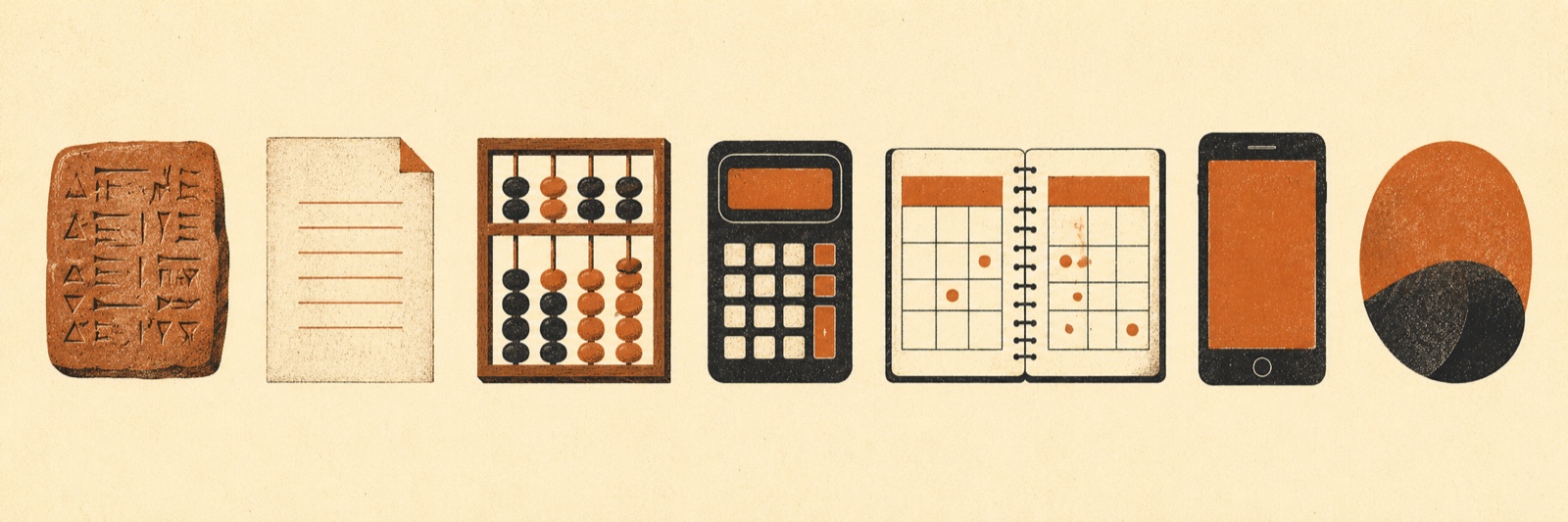
But this is not new. Inventing technologies to offload our mental load has been a constant thread throughout history. In fact it coincides with the rise of our species to dominance on this planet:
- Poetry let us preserve knowledge before writing was invented
- Writing freed us from having to hold it all in memory
- Calculation tables freed us from repeating the same calculations over and over
- Calendars freed us from keeping every commitment in our heads
- Calculators freed us from doing arithmetic by hand
- The web and web search put a world of information at our fingertips
- Everyday digital devices act as external memory and thinking aids in countless ways
Imagine the mental load of getting through a single day of modern life without any of these. They’re exactly what lets us offload what our brains would otherwise be consumed by, and spend that freed capacity on something higher level.
AI is the same - with one important difference. The earlier technologies offloaded storage, retrieval, and computation. AI can offload synthesis and judgment too: the higher-level thinking itself. That’s not a reason to fear it. But it does mean that critical-thinking is non-negotiable rather than optional.
Just as a calculator is useless if you don’t understand the problem you’re trying to solve, an AI response is useless if you don’t apply judgment when reading, interpreting, and scrutinizing it.
The modern world is incredibly complex. Offloading mental tasks to external aids is the only way we can deal with it. We should welcome every new opportunity to do so - and put the freed capacity to good use, at a higher level of abstraction.