LLMs will change the way we work in such fundamental ways, and I think we’re just beginning to understand how.
I recently built a slide deck at work — something I do all the time. This time, I decided to see how far I could take it using AI.
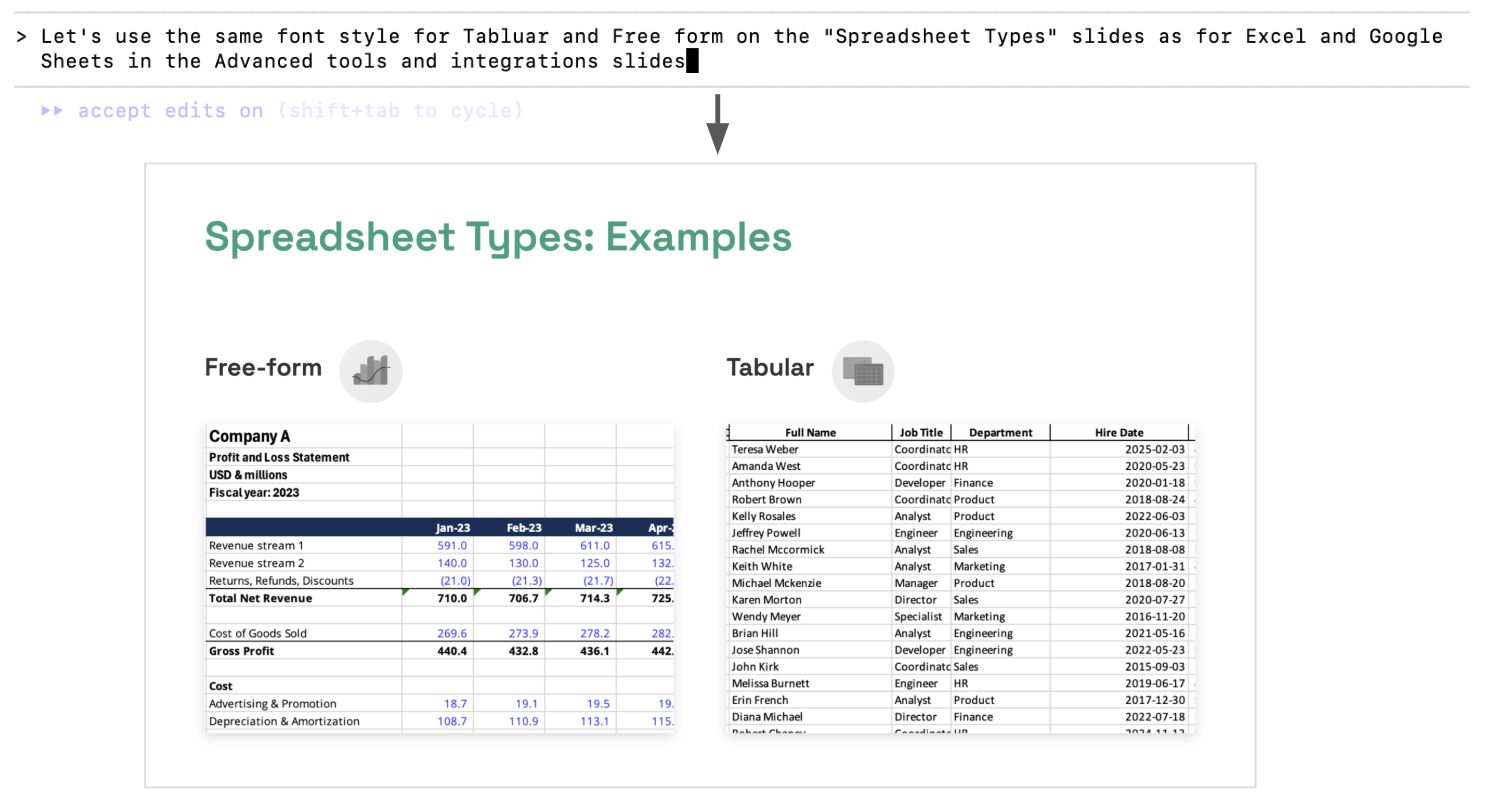
I started by building my outline as one indented bullet list, then collected the screenshots and logos I already knew I wanted to include. I asked Claude Code to draft the deck, giving it some style guidance. Then I went through the draft slide by slide and made edits — some directly (adding bullets, changing phrasing), others by asking Claude to handle (styling adjustments like “make this slide two columns and add drop shadow to the image”, or content suggestions like “suggest 2 good examples of X”).
After a first review round, I collected feedback from others and added it as “TBD” placeholders in the slide content with short explanations. The final iteration was: “Walk through the TBDs one by one, tell me how you understand them, and suggest a solution. Don’t change anything without consulting me first.” Not unlike how I’d work with an eager colleague helping me out. We walked through the suggestions together — some I approved directly, in other cases I needed to provide missing images or data, in others I had to rewrite directly.
This further convinces me that this type of hybrid AI + UI work is the UX of the future — and that we’re currently over-rotating on chat interfaces.
To be clear, this is still pretty far from being possible using traditional presentation software like PowerPoint, Google Slides, or Apple Keynote. The question is whether the current vendors (Microsoft, Google, Apple) or the frontier AI environments (ChatGPT, Claude) will take the helm. There are startups working on AI + UI presentation solutions directly, but I’m skeptical of taking on single applications of the productivity suites.
The interesting race isn’t chat vs. apps. It’s who builds the hybrid.
Originally published on LinkedIn.