Tagged: Ideas
-
Same cloud, same terms. AI just talks back.
Many people hesitate to put a sensitive document into an AI tool, while the very same document already sits in their cloud storage. On a work account, the exposure is the same.

-
Two of the most common pieces of startup advice are "fail fast" and "never give up"
Fail fast is about killing bets. Never give up is about the problem. Overnight success is what you get when you hold both.

-
Developers' multi-tasking fatigue isn't a new thing
The fatigue developers feel with AI agents - line up a task, jump to another while it churns - is just the punch-card batch era, back for now.

-
The Return of the File - and the Editor Sidekick
On building an everything editor, and why the humble folder is back at the center of how we work.

-
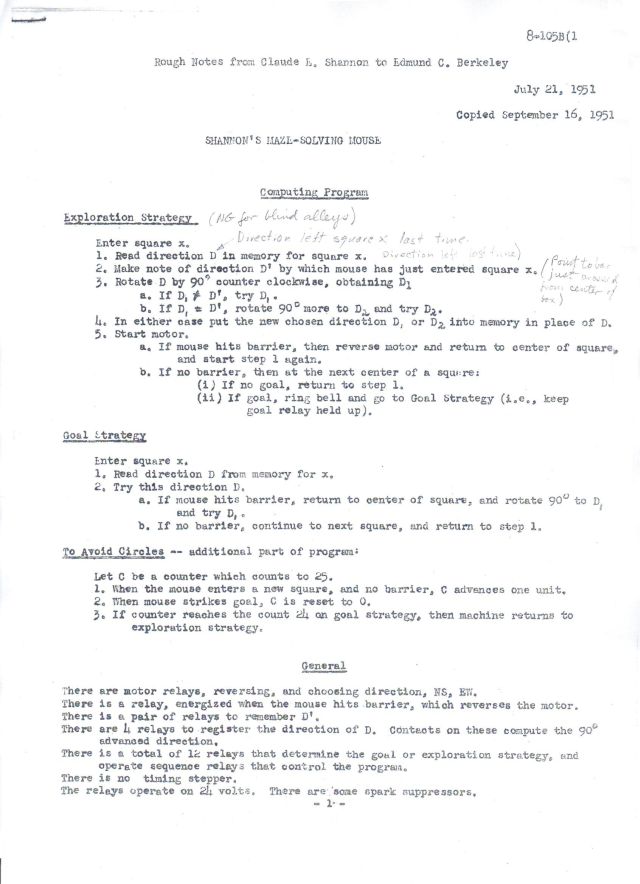
Claude Shannon's Maze-Solving Mouse
In 1952, Claude Shannon built a mechanical mouse that could solve a maze. The clever twist: the intelligence wasn't in the mouse — it was in the floor.
-
The Spark
What skills should students focus on as AI reshapes the job market? The answer is simpler than you might think.

-
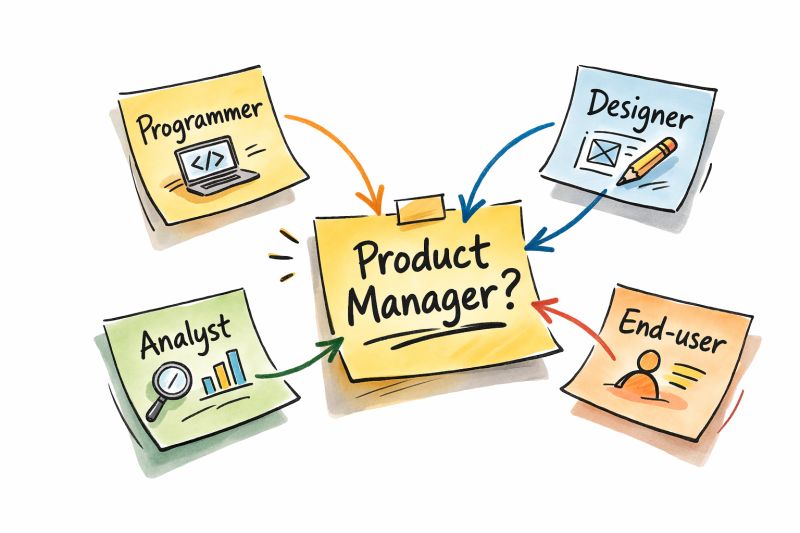
We're all product managers now!
With the rise of AI coding, every programmer, analyst, designer and end-user has become a product manager. The question is: how do we become good ones?
-
Only for Sissies
The reception of Fortran in the 1950s sounds uncannily familiar. A passage from Richard Hamming's 'The Art of Doing Science and Engineering'.

-
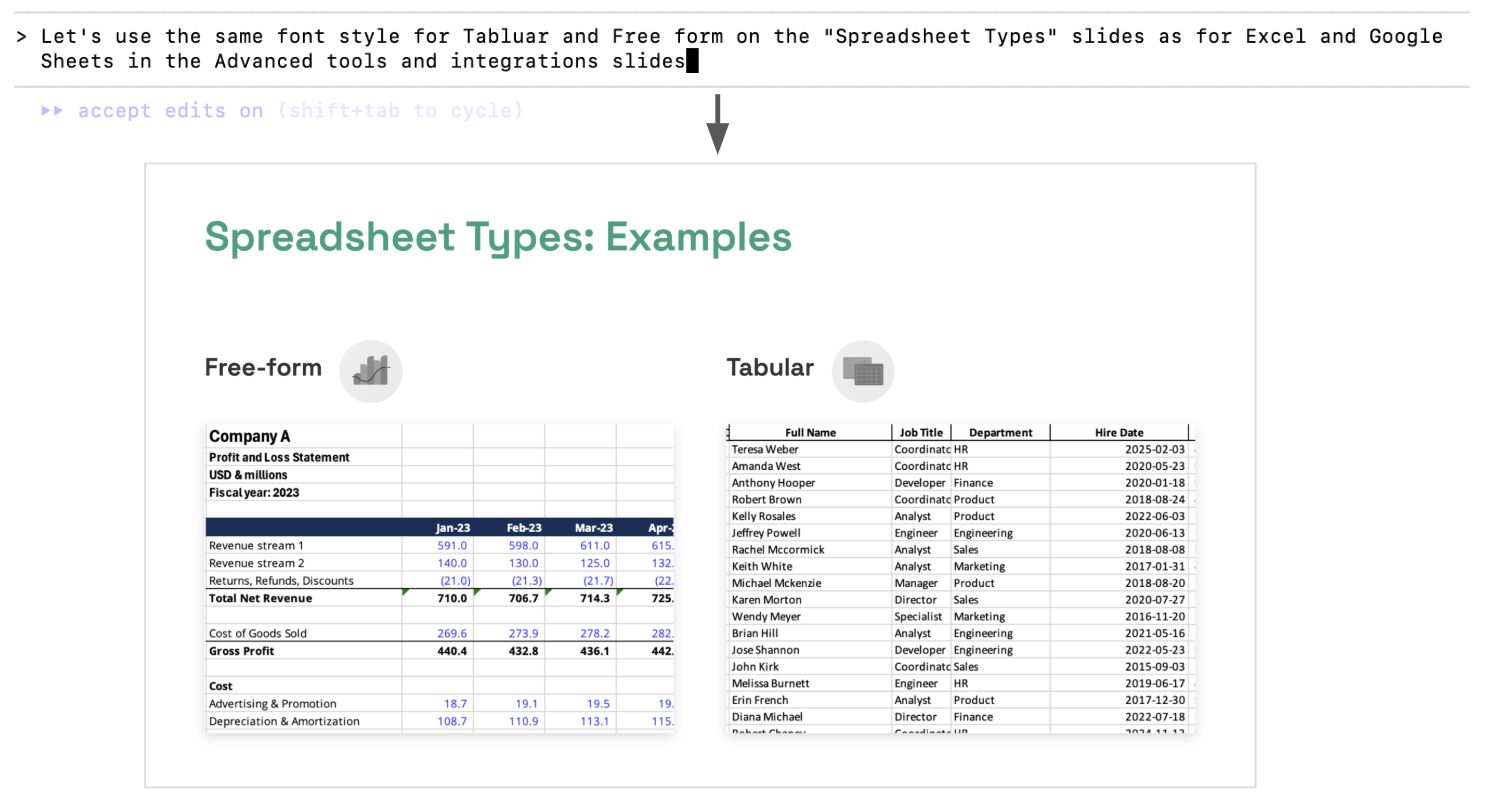
Hybrid AI and UI Is the UX of the Future
Building a slide deck with Claude Code convinced me: the hybrid AI and UI mode of working is the UX of the future — and we're currently over-rotating on chat interfaces.
-
The Future Isn't About Letting AI Use Software
Today's AI agents simulate a human at a screen — mouse clicks, pixel-reading, typing into UI fields. That's a crude stop-gap. The future is software built for AI, not AI pretending to be human.
-
Could Creativity Just Be Hallucination With a Purpose?
Reasoning models hallucinate more, not less. Which raises a strange question: is creativity just bullshitting with intent?

-
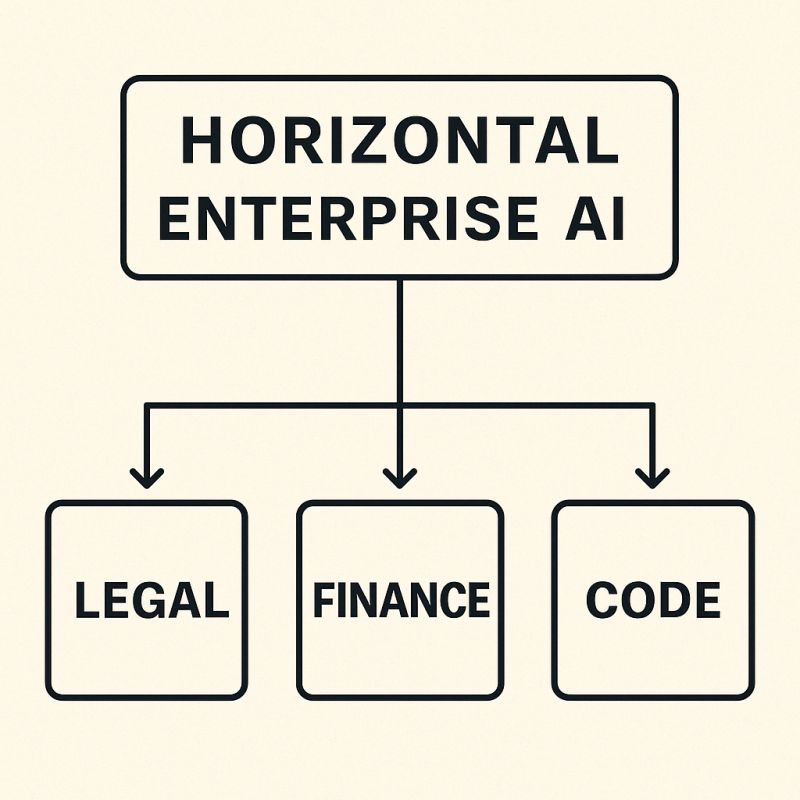
Vertical Enterprise AI: Standalone, Add-ons, or Marketplace?
Vertical AI for legal, finance, and dev tools is clearly going to be huge. But nobody knows yet how it will integrate with horizontal platforms — or if it will at all.
-
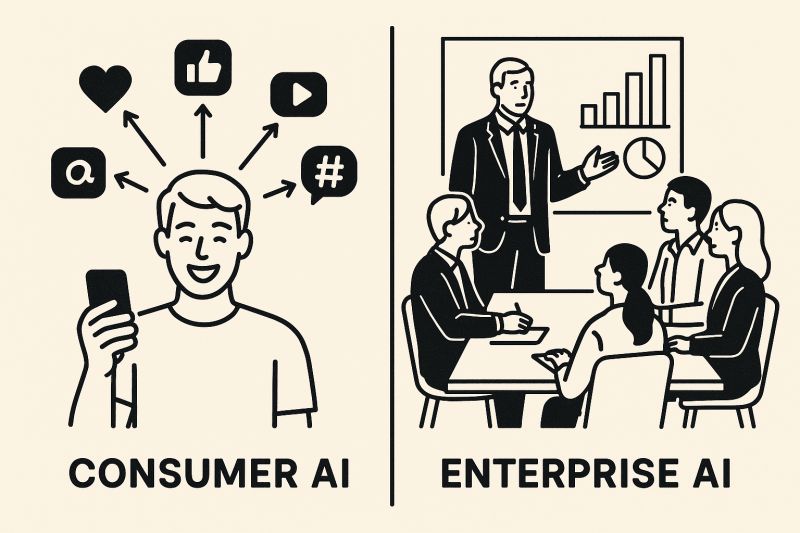
ChatGPT Has All but Won the Consumer AI Race. Enterprise Is a Different Story.
Enterprise AI isn't winner-takes-all. It will be won company by company, probably with a dash of vertical AI on the side.
-
The Air Canada Chatbot Problem
Air Canada's chatbot gave a customer incorrect bereavement fare pricing. A court held the airline liable. It's an early preview of the reliability problem at the heart of AI.
-
DataMarket launched
I’m pleased to announce the launch of DataMarket’s new website. As the name implies, DataMarket is about creating a marketplace for data – structured data to be more specific. This means all sorts of statistics and tabular data, including but not limited to: market research, exchange rates, vario...
-
Presentation on Innovation (IceWeb 2008)
Ever since the banking crisis struck Iceland a few weeks ago, I’ve been running out and about to advocate for innovation as the way to rebuild the economy. Yesterday, I was privileged to give a presentation on the topic at the IceWeb conference. The title of my talk was “The Innovation Renaissanc...

-
The future of finance: Total transparency?
The financial crisis hit Iceland full force last Monday. One of our banks was pretty much nationalized, followed by a large investment company filing the equivalent of Chapter 11. This led to significant losses by a large “risk free” money market fund, that stored a part or all of the personal sa...

-
Starting up – that would be the fourth
Well, well, well. I guess it’s some kind of a medical condition, but I’m leaving a great job at Síminn (Iceland Telecom) to start up a new company once again. This will be my fourth start-up, and I’m as excited as ever. It will be a relatively slow migration as I’m finishing off a few […]

-
The Government API
A couple of weeks ago I attended a conference where there was a lot of talk about Business Process Automation (BPA) and Service Oriented Architecture (SOA). Disclaimer: Yes, I do lead a very exciting life, even if attending such a conference may indicate otherwise. You’re probably familiar with t...
-
The Polar Express … for data!
I was at a nerd party last Friday and as it goes, ideas became wilder as the beer supply diminished. One of the wilder ones stuck with me: Jarl brought up the possibility of a submarine cable across the Arctic region, properly connecting East-Asia and Europe. This is certainly a wild idea, but as...

-
How far is it?
I’ve always been fascinated with those center-of-the-world type sign posts that tell you how far it is from where you are to various distant places. I just made a fun little tool so that anybody can do the calculations needed to create one. It’s fairly straight forward to use. The input fields ac...
-
Visited Countries – Revisited
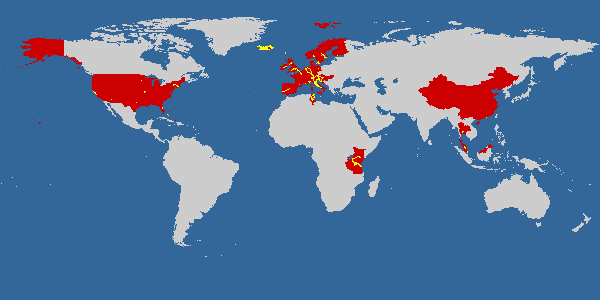
When I read Bill Bryson’s fantastic book “A Short History of Nearly Everything“, one of the things that stood out, was a reminder that the world is still a really big place. Even though we feel that we can – with a credit card, and a solid visa – get pretty much anywhere in the […]
-
Massively Multiplayer game as a work place
More than two years ago, I wrote a post titled When People are Cheaper than Technology. The basic premise there was that the cheapest and best solution to many problems we are trying to solve by building software systems could be to make people part of those systems – basicly what Amazon is now t...
-
Using AJAX to track user behavior
Here’s a thought. With the rise of AJAX applications this is bound to happen, and may very well have been implemented somewhere, even though a quick search didn’t reveal a lot. So here goes: By adding a few clever Javascript events to a web page, it is possible to track user behavior on web pages...
-
Massively Multiplayer Robot Game (virtual reality without the “virtual”)
Here’s an idea that has been cooking in my head for years: Making the most real computer game still to be seen anywhere. How? By actually making it happen in reality. I’m not thinking about games that blur the boundaries to real life and make yourself a character in the plot (Alternate Reality Ga...
-
Introducing: I like! – Collaborative Approach to the Web
I’ve been doing some coding, hence not much written on Wetware in the meantime. The hack is called “I like!” and is a very simple, yet powerful service that allows you to mark web pages you like, by a single click of a button. In return you get several things: First of all it recommends […]
-
Games With A Cause
Some time ago I wrote about various attempts to gather common sense, the lack of which is believed to be one of the main hurdles to creating successful AI systems capable of human-like interaction. A few weeks later I wrote about people as parts of computer systems to make them cheaper or more in...
-
Merging Social Networks
Social Software is the in thing these days. Among the sites mapping the social networks of Internet are Friendster, Tribe.net and LinkedIn. Following their success we have less known services such as Ryze, Everyone’s Connected, MeetUp and tons of others. It even seems they are running out of catc...
-
Interesting Content Indicator
Every day I read a lot of news, articles and other information online. Most of it I read through a news aggregator (have tried a few, currently evaluating NewzCrawler), but I also visit a few websites regularly (that don’t have RSS feeds) and people send me interesting links via Instant Messaging...
-
The Lowest Integer Number not Found on the Web
A long time ago I heard about a funny paradox. The paradox was about the lowest integer number that was not special in any way. “Special numbers” were defined by certain rules. Even numbers were special, so were prime numbers, any multiple of 5, 2 in any power and any number with two digits alike...
-
The Needs and Rights of Humans and Robots
In the Wetware post last week on “A New Way to Fight Blog Comment Spam” I proposed methods that would prevent robots from posting comments. Kalsey commented that there are clear indications that many spam comments are actually posted manually, rather than by robots, rendering my proposed function...
-
A New Way to Fight Blog Comment Spam
Spam in blog comments has become a problem in the blogosphere lately. Bloggers have been busy manually deleting entries, blocking IP addresses and some people have come up with comment spam filters that use keywords and such in a similar way as spam filters do. Now here’s a thought: Comments are ...
-
When People are Cheaper than Technology
Technologically minded people tend to look for technological solutions to the problems they face. Naturally so, but every technological solution can be improved. There is always another solution, simpler and better than the current one. Most inventors will admit that they know a lot of ways to im...
-
Mapping the Networks of Business
Through the years, I’ve seen more “value chains” than I care to remember. “Where do you see yourselves in the value chain?”, is a VC question ranking up there with “Are you burning enough?” and “Would you people consider yourselves to be a - [fill in the blank: infrastructure, content-only, aggre...
-
Google miner
Google is an extremely powerful tool. Don’t worry, I’m not joining the “Google is too powerful” debate, it’s outside Wetware’s scope anyway. But Google is more than just the simple text search. One of the brilliant things here being Google’s web APIs. That’s right; Google is allowing us – the ner...
-
Grand Challenge: Journeys in Non-Classical Computation
The fourth and last review of Wetware related Grand Challenge proposals; we take a look at the ‘Journeys in Non-Classical Computation‘ project. This proposal differs from the rest of them in that it does not propose any direct goals, but rather journeys down some of the less traveled roads of com...
-
Grand Challenge: Architecture of Brain and Mind
Third in Wetware’s line of Grand Challenge reviews, we take a look at the ‘Architecture of Brain and Mind project‘ proposal. This proposal, moderated by Mike Denham, Professor of Neural and Adaptive Systems at the University of Plymouth, draws from a number of similar original Grand Challenge sub...
-
Grand Challenge: Memories for Life
The second review of Wetware-related Grand Challenge proposals discusses the Memories for Life project, proposed by Andrew Fitzgibbon with the Robotics Research Group at the University of Oxford and Ehud Reiter lecturer in Computing Science at the University of Aberdeen. The Memories for Life pro...
-
Grand Challenge: In Vivo In Silico
First in the series of reviews of the Wetware-related Grand Challenges I promised; a closer look at the project In Vivo In Silico, proposed by Professor Ronan Sleep at the School of Computing Sciences, University of East Anglia, Norwich. “In Vivo” is a Latin term commonly used in biology and medi...
-
Many Grand Challenges Wetware related
The Human Genome project and the project to create a championship chess playing program are among the projects recognized by the UK Computing Research Committee (UKCRC) as so-called Grand Challenge projects. Inspired mainly by the Human Genome Project “the Committee has noted that the progress of...