Vertical enterprise AI solutions are clearly going to be a huge market — but it’s still hard to envision exactly how things will play out.
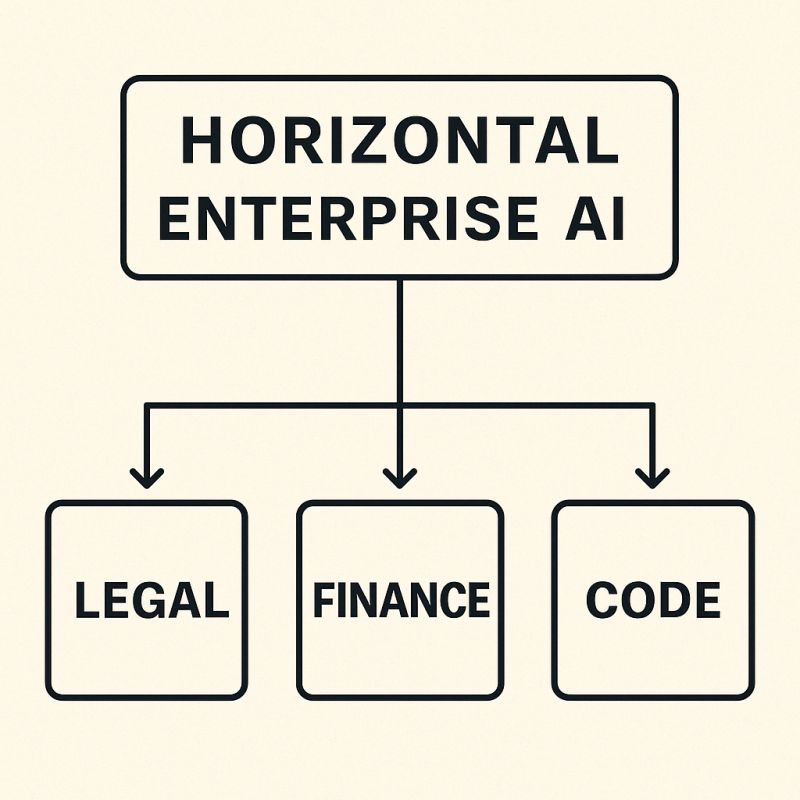
To recap where things stand: ChatGPT has all but won the consumer AI race, while the enterprise market remains wide open. Most companies will eventually settle on a primary vendor for company-wide deployment — but those horizontal solutions simply won’t offer the depth needed for domain-specific use cases:
- Legal will need vertical solutions, likely tailored to specific regions and jurisdictions
- Finance has nuanced, specialized requirements that won’t be met by general-purpose AI
- Developers are already leaning into vertical tools built specifically for code
But this kind of fragmentation brings real challenges — for IT, for governance, and especially for the CFO. Each solution needs to be vetted independently, budgets get scattered, and there are undoubtedly missed opportunities when tools can’t interoperate or share context.
So what happens next?
- Will vertical solutions be sold standalone?
- Will horizontal players offer vertical “add-ons”?
- Will we see a true AI “marketplace” layered on top of core platforms?
- Or will integration happen through looser, more dynamic handoffs between systems — delegating tasks or sharing information on demand?
Right now, my money is on standalone. That’s what we’re seeing in the market already. But I expect a strong push toward integration, and maybe even a rethinking of how enterprise AI systems interact — moving from the deep, complex integrations of today’s IT to more flexible, task-level collaboration.
Originally published on LinkedIn.