Originally published on the GRID blog.
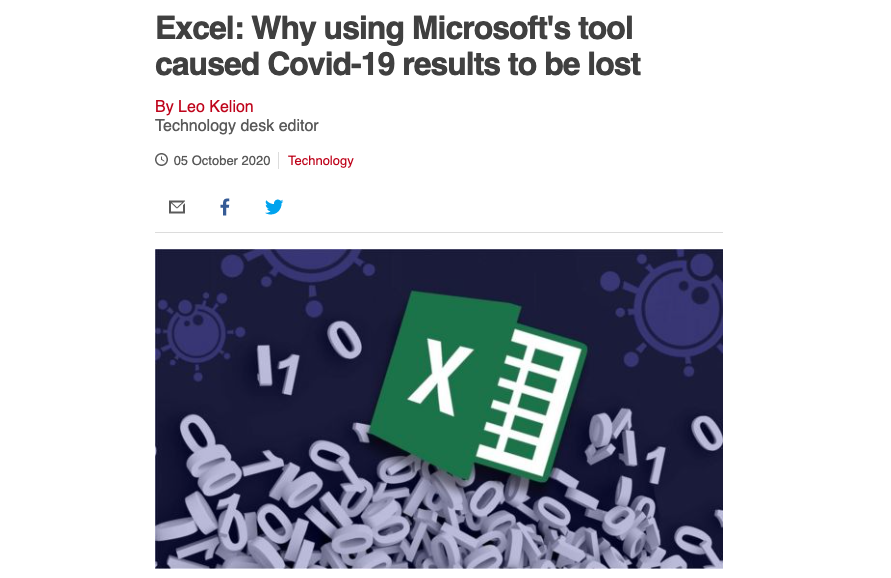 BBC’s news report on the matter
As you’ve probably heard, about 16,000 cases of the coronavirus in the UK went unreported because Public Health England used Excel and an old Excel-file format, unable to handle the amount of data in question.
Excel is what people use when they don’t have time to wait for proper IT support or the purpose-built tools to do their job. It’s usually a great way to get started, but too often becomes the “production system”.
It’s a testament to the power and flexibility of spreadsheets that “ordinary people” can use them to take care of so many of their day-to-day IT needs and stand up their own “systems”.
After all, there are about 100 times more Excel-developers in the world, than any other programming language. Yes, spreadsheets are programs.
As a result every organization has a “spreadsheet fabric”, an assemblage of — sometimes loosely connected — spreadsheets lying on staff’s local computers, network drives and various cloud services.
Therefore you will probably find more of every organization’s proprietary data and business logic in spreadsheets than in their formal IT systems.
We should not blame the people that used Excel for the UK Covid data. We should blame their environment for not providing them with proper IT guidance and help.
Most importantly we must embrace tools — like spreadsheets — that empower domain experts to get s**t done in the heat of the moment, continue improving them and make them an understood and accepted part of IT, so that mistakes can be avoided.