Originally published on the GRID blog.
Although we’ve only been working on GRID for a little over 18 months, the backstory is certainly somewhat longer.
In many ways it starts back in my DataMarket days. DataMarket was an early Data-as-a-Service company, started in 2008 and built by some of the same people as now work on GRID.
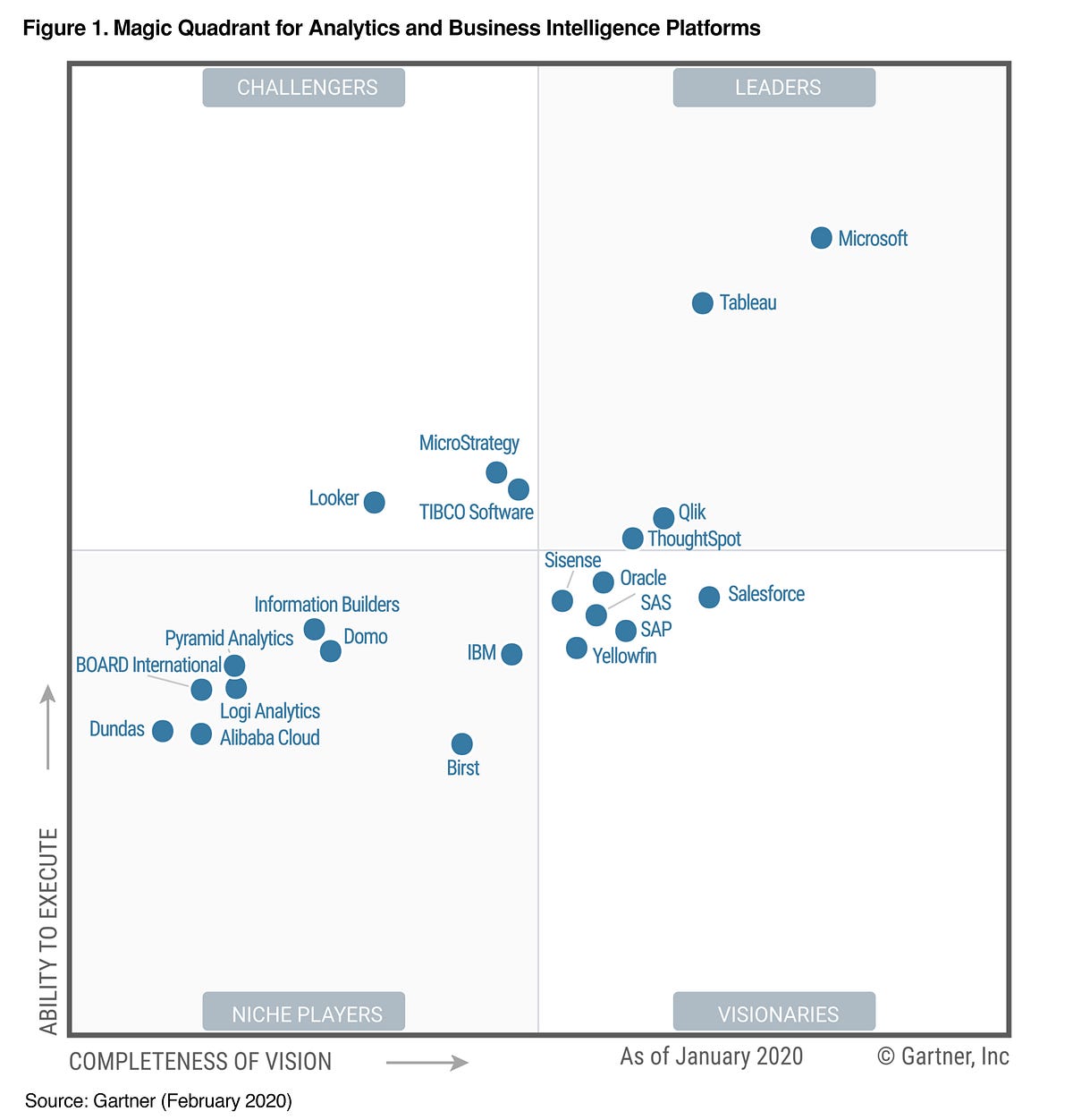
DataMarket was acquired in 2014 by Qlik, a pioneer in the “Modern Business Intelligence” space and still one of the leaders — together with Tableau, Microsoft (through Power BI), and most recently ThoughtSpot — according to Gartner’s Magic Quadrant:
As DataMarket was all about delivering market intelligence data to decision makers, we had learned a lot about how business users worked with data and what they wanted to achieve with it. But moving from the data side of the world to the “tool building side” taught us even more.
One of the first realizations was that even though the messaging of every popular tool in the BI space was that they were so easy to use that “anybody can do their own analysis” and “answer their own questions with data”, in reality they were all power user tools: A few people within each organization really learned how to use them, and they then serviced 10–50 other people as the “Power BI girl” or “Tableau guy” within their professional circle.
What is more, as all of these products had been growing very fast the companies behind them were much more interested in figuring out how to land the next multi-million dollar enterprise deal than in how to further empower the every-day knowledge workers.
And in fact I think they were right. The model of having only a few “authors” and many more “consumers” within each organization was working for them. Lowering that bar would also have had an implied a change in their business model, and it is famously a lot harder to go down the ladder of go-to-market models than it is to go up: Harder to go from inside sales to self-adoption, than from inside sales to field sales. Or in the words of VC Christoph Janz, harder to go from hunting deer to hunting rabbits, than from hunting deer to hunting elephants.
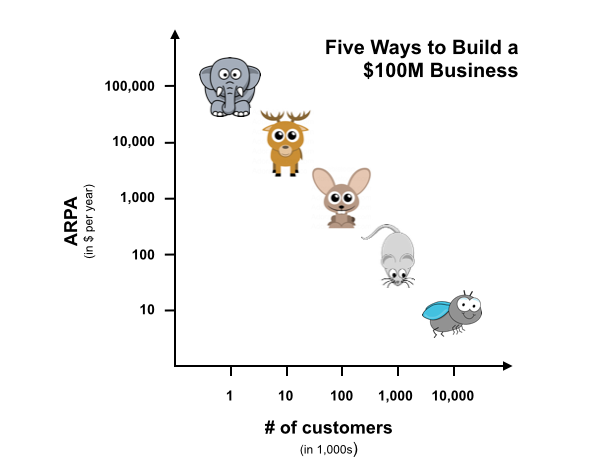 Check out Christoph’s post about 5 ways to build a $100M Business for an enlightening read about business models and go-to-market strategies
My passion — however — lay much more in how working with data and numbers could be made easier and more accessible to business users sitting at their desks, trying to get their every-day jobs done.
So I began casually looking into that. And the more I looked, the more I saw spreadsheets. Everywhere.
It’s not that spreadsheets were news to me. I’ve known and used spreadsheets more or less my whole life.
 My “break-the-glass-in-case-of-emergency” kit
But spreadsheets are a little bit like oxygen. You use them every day, without giving it a second thought.
However, the more I dug the more convinced I became that there were overlooked opportunities here. The fact that a billion people use the same type of software for everything from planning their children’s birthday parties to making multi-billion dollar policy decisions, and from ordering lunch at a startup to facilitating billing processes at multi-nationals had to mean something.
So, while this will sound a lot more metodical than it felt at the time I gradually started three streams of “research”:

- Conversations: I began asking everybody I met if they used spreadsheets, what they used them for and why they didn’t use something else. I may not have the most fun guy to talk to at parties at that stage!
- Research: There is very little industry research on the spreadsheet market. Two vendors hold 99% of the market and most buyers are either “Microsoft shops” or “Google shops” already, so there is very little for the likes of Gartner, IDC and Forrester to sell. The most interesting research I found came from the academia, mainly involving risk and quality assurance. I spoke to several of these researchers. They had a lot of more general insights about spreadsheets, but perhaps the most valuable thing was that a few of them had gathered large corpuses of “real world” spreadsheet files. And they were kind enough to make those corpuses available. That gave me an opportunity to run analysis on tens of thousands of workbooks to understand how big spreadsheet files typically are, what the most common functions people use are, how complex their models are and if there are any calculations in them at all (fun fact, more than 40% of spreadsheets don’t).
- Experiments: I prototyped various things to try out different theories, but before deciding on a certain way to go with a product, I decided to do some go-to-market experimentation. So I started a “trickle campaign” on Google ($5 a day I think) as if I had a product in the market already to see if people were searching for certain keywords and if they responded to certain messaging by clicking on the ads. They did. And rather than landing on a beautiful product page — as they do today — they landed on a survey. Which surprisingly many were willing to answer.
All of this gave me a lot of material to better understand spreadsheets, their nature and potential market opportunities.
There were a lot of details, but if I were to sum up my findings they would come down to two things:
- Spreadsheets are knowledge workers’ way to get stuff done with computers — without having to rely on others
- Every organization has a “spreadsheet fabric”
The second point is a direct consequence of the first one. With every knowledge worker turning to spreadsheets whenever they have to do anything with data and numbers, their organizations’ proprietary data and “business logic” is gradually captured in an assemblege of distributed and disparate spreadsheets on local computers, network drives and in cloud services — with no oversight and little knowledge of their organizations.
It is quite amazing that there is such a generic and flexible tool that regular business users can use to take care of a lot of their basic IT needs. After all, spreadsheets are programs, which makes Microsoft Excel and Google Sheets the two most used software development platforms in the world. But you also don’t have to spend a lot of time around spreadsheets or in business in general to realize that there is a lot still to be desired.
This leaves enormous opportunities for improvements and GRID was formed to capture some of them.
The first version of the product — coming out of closed beta in the coming weeks — provides spreadsheet users with a better way to communicate the data they’ve gathered and the models they’ve built: A notebook environment on top of spreadsheets if you want.
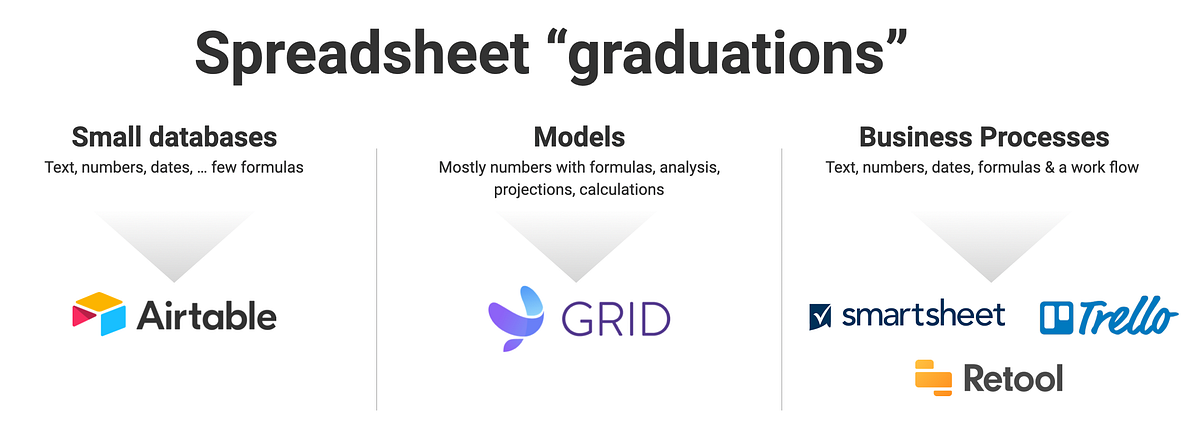
But a broader way to think about it is from the perspective of the three main things people use spreadsheets for:
- Small databases
- Numbers and calculations
- Simple business processes
Airtable has more or less captured the market when you’ve been using spreadsheet software as a database and it’s time to graduate to something better suited for the task.
Smartsheet, Retool, Trello and several others are good places to go when you’ve exhausted traditional spreadsheets for simple business process management.
And we want GRID to be where your spreadsheets graduate to when you want to do more with numbers and calculations — in many ways the essence of what spreadsheets are built for.
And that’s what we set out to do 18 months ago:
Reinventing the way ordinary people work with data and numbers.